Tuesday, October 19, 2010

An Artist’s View of The Lakota Prairie: ‘Living Perfectly Happy Being Miserably Comfortable’ 120 Years After Wounded Knee


            If you want the 50-cent tour of South Dakota’s Badlands and surroundings, do it yourself by hanging a left at Wall Drug, spending a few hours off I-90, and be on your way in time for dinner in Rapid City.
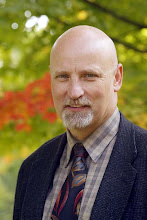
            Or, you can hire someone like Warren “Guss” Yellowhair, Lakota artist, teacher, linguist and tour guide, to take you on a trip into the real prairie that lies beyond the national park, into the historic reservation of Pine Ridge.
            Have him stand at the grave where the Lakotas massacred at Wounded Knee, within the reservation, lie, and sing a remorseful song to the dead. Have him show you his art, from willow dream keepers, to ledger book art prints of war chief Crazy Horse.
            And, while he drives amidst the abject poverty of the villages within this huge prairie reservation, have him tell a joke or two while explaining that he feels the Lakota here are in the beginnings of lifting themselves out of all this by the best means possible: through education, self-respect, and a return to the “old ways,” that have been lost for more than 100 years.
            We drove off towards “the res,” as Guss puts it (his Lakota name, by the way, isn’t Guss; it’s Tasunkanajin, or His Horse Is Standing), as he explained that he’s been a traditional Lakota artist for 25 years now, learning brain tanning buffalo hides from his uncle, other artists, and elders, while also about making drums robes, and unique ledger book art. That art form began in the 1870s, he said.
            “It’s a combination of two cultures. Trading posts used paper, ink and pen to keep track of inventory and records on ledger books, and for the first time, Lakota turned from hides to art on that same paper, creating pictographs telling the history of the culture, and it’s given me the opportunity to travel within the U.S. and to Germany four times.”
            Guss also creates parfleche art, rawhide boxes originally created to hold items, and used in arrow shields. He is an instructor at Oglala Lakota College, teaching students on the Pine Ridge reservation art, Lakota language immersion and self-respect. The latter, through what he calls winter, fall, summer and spring camps for reservation youth that take place each year. The college has conferred more than 3,000 degrees in everything from nursing to teaching.
            As he drove us through the Dakota plains and in and out of the Badlands, he told us about the reservation, 100 miles long, 50 wide, where more than 30,000 Lakota live, or rather, exist.  Lakota, he says, translates to friends, or allies. “We’re very friendly but if you poke us in the wrong way...,” he joked, with more than a hint of historical reference. The word Sioux came from a mix of French and Ojibway, so most Lakota don’t like that word.
            On the day of the Lakota new year, the last day of April (interestingly, the same weekend we fly fishermen celebrate the opening of trout season in Michigan), we go to Thunderbird Mountain and offer tobacco and prayers to welcome back the thunder beings. We also go to Old Baldy and Harney Peak in the Black Hills.” Wind Cave also is sacred because the Lakota believe that is where they emerged onto the earth.
            But on nine college centers, some 1,500 students per semester are working towards four-year degrees, to lift up the population from poverty as part of the Proud Horse Institute.
            “We do have a casino, called Prairie Winds. It provides some jobs. In a place where there is 60 to 70 percent unemployment every little bit helps.”
            As he related that story, we stopped at Scenic, a small near-ghost town on the edge of the Badlands, which saw its last visitor decades ago. Owned by one person, it was rumored it’d been just sold to the Hell’s Angels. One of its few residents greeted us, then asked for a handout.
            It was an example of what Guss was just talking about.
Visitors who want to immerse themselves in the reservation can stay at several properties, and many do, including many Europeans who can’t get enough of the West. There are two hotels, one at the Prairie Winds Casino and the other, Lakota Prairie Ranch. There are also bed & breakfasts, but the real draws are also tragic ones.
            Wounded Knee
            The upside down American Flag, flown at a house near the small cemetery looking over Wounded Knee Creek tells all you need to know about what happened here during one of the most shameful events in U.S. military history.
            We walked up the knoll overlooking the “battlefield,” in quotes because it wasn’t a battle at all.
            In frigid December 1890, the Lakota chief Big Foot, suffering from pneumonia, had moved his band here after fearing he would be the next target after Sitting Bull was killed, and he was afraid to seek refuge with Red Cloud in Pine Ridge.
            Red Cloud, who does not have a great reputation among many Lakota, did not protect Big Foot. So as the Army met with Big Foot, to give up their arms. A deaf Indian was asked to give up his rifle. Since he couldn’t hear, two soldiers held him, and his rifle discharged in the scuffle, according to some reports. That was all it took. Soon, the wrath of the re-formed 7th Cavalry, some say to revenge the victory at Little Big Horn, fell upon the encampment along the creek. More than 300 of Big Foot’s band lay dead along the creek, including Big Foot, a majority women and children.
            After a three-day blizzard, the Indian dead were buried at the top of a hill in a mass grave overlooking the site, and from which deadly rapid-fire artillery rained down upon Big Foot and the soldiers below. And the government handed out 20—20—of Medals of Honor after the massacre to the participants. Twenty-five Army died, many believed to be victims of friendly fire.
            As we visited the grave, Guss sang his moving song. The words, he explained, meant this:  Great Spirit, you’re the only one with great compassion; Through your compassion I am strong; Because of the sins of the world, I am having a hard time.
            “I had though that was an appropriate song, calling upon the Creator for strength to continue as a nation of people regardless of what was done to us,” he said later. “The genocide here was the pinnacle of the breaking of the sacred hoop of life for our nation.”
            The site was a turning point in 1973, when Russell Means and other American Indian Movement leaders made their stand for 77 days at a church where Big Foot and his band are buried, to call attention to the reservation’s dismal poverty, and to begin what Guss and others are doing today—through the old ways and education, to provide hope, and most of all, pride, in being Lakota.
            “The government fulfills the treaty obligations by handing out mediocre services, and that creates two states of mind here, that if you’re given something, why should I work, or the government owes me. So a lot of factors went into creating this situation,” he says.
            “But we’ve got the land, resources and the people, but because of that mindset it’s hard. We have the largest dropout rate in the U.S. here. People begin to loose that dream and get caught up in drugs and that puts more dirt on the grave,” Guss adds.  “I like to say that the people here can be perfectly happy to be living miserably comfortable.”
            But there are signs of change. “With our college, people are beginning to educate themselves, so I do see a future for our young people. Our old style of government was families coming to help each other, and people are going back to that. That gives power back to they people so they can do some of these things on their own. For the longest time we were made to feel ashamed of our history and to speak the language.
            “All this ties into being proud of being Lakota,” he says.
            Guss says that besides tours like the one we were on, you can also book pheasant or buffalo hunts and other outdoor pursuits either through the Pine Ridge Area Chamber of Commerce, home of a small but good museum, and the Oglala Sioux Parks and Recreation Authority at www.osprabuffalokeepers.com.
            A stop by the Red Cloud School, near the town of Pine Ridge where another good museum is located, along with a shop selling lots of Lakota-made art, also is worthwhile.
            And, you can stay on the reservation and learn how the Lakota are trying to escape from 100-plus years of well-meaning, but misguided, government action, and self-hatred.
           
            When You Go
            A self-taught traditional artist, Warren “Guss” Yellowhair also has an AA in Lakota Studies from Oglala Lakota College, and teaches there. He has displayed his art in many shows and exhibitions, including Gold Rush Days in Sidney, NE, and the Coeur d'Alene Art Show in Idaho, and elsewhere across the country.
            He also helped organize portrayals during the Lewis & Clark bicentennial sponsored by the National Park Service with the Lakota Heritage Society. His art is available and many local powwows and in stores such as Prairie Edge Gallery in Rapid City and Lakota Prairie Ranch Resort, near Kyle, and on eBay. For tour information, go to www.nativediscovery.org. To contact Guss about both his art and tours, call 605-454-0507. Or email him at Tasunkanajin_1@yahoo.com.
            For a list of upcoming powwows on Pine Ridge, along with other guides and native artists, go to the native discovery.org site, or www.pineridgechamber.com. The site also has information on reservation accommodations including campgrounds, hotels, and bed & breakfasts, plus horseback riding, fishing and other cultural events and art galleries and attractions, from the Oglala Lakota College History Center in Kyle, to area guest ranches.
            While you’re there, buy a Tanka Bar, a natural buffalo and cranberry energy bar made on the reservation. Learn more at www.tankabar.com.

Warren Guss Yellohair displays some of his Lakota art

A monument to the dead from Wounded Knee stands over the cemetery as prayer offerings flutter in the wind

Wednesday, June 9, 2010

Searching for Golf Nirvana in Michigan? Find it at Roscommon’s Forest Dunes


           By Bill Semion

            If you’re in a golfing family searching for that out-of-the-ordinary course to call your own, you just might find it in the pine forests of East Michigan, a few long drives north of the tiny vacation community of Roscommon. 
            Tucked in the pines and bordering the famed Mason Wilderness Tract, Forest Dunes is an uncommon find in Michigan’s long list of public golf course choices. If you’re a golfer, you’ll be blown away by your discovery, never expecting what you’ll find, and even if you’re not a golfer but with someone who is, there is plenty to do here while your companion is on the links.
            After entering the grounds and meandering your vehicle along a the pine-shaded road, prepare to be stunned with a clubhouse that looks as if it were airlifted straight from Scotland.
            The massive 22,000-square-foot stone and wood structure looks over an artful 18-hole course designed by none other than Tom Weiskopf, who carefully cut into the surrounding red and jack pine woodlands while incorporating the natural landscape and dotting it with Scottish-style mounded fairways and plenty of sand to get you in trouble, hence its name.
            Each hole of the par 72, 7,141-yard course is named, with the first appropriately called Eagle’s Perch, named for the majestic birds golfers often see cruising above. In fact, you’ll see more bald eagles and other winged creatures than you probably thought, too. In 2003, Forest Dunes was certified as the first Gold Audubon Signature sanctuary in Michigan, one of just 16 worldwide. And somewhere along the way, you’ll also probably hear that the grounds weren’t always so genteel.  The surrounding woods sported an earlier nefarious history, as a hangout and getaway for Detroit’s infamous Purple Gang in the 1920s.
            Since Forest Dunes opened for golf, the accolades for this relatively undiscovered Troon-managed course have mounted up, starting with being named the top best new upscale golf course in American by Golf Digest in 2003, and continuing in 2009, when it was listed as the No. 2 best course in America by GolfWeek Magazine, and a 4 ½-star rating as one of the Best Places to Play by Golf Digest in 2008-09.
            Inside its beautifully appointed locker rooms, you’ll see some of the names who’ve discovered the club.  They include Detroit Red Wings great Steve Yzerman and former Visteon CEO and Ford Vice Chairman Peter Pestillo among them.
            Also on the grounds is a beach club bordering 27-acre Lake Au Sable, made for relaxing, swimming, or fishing (equipment is available at the club).  Or, grab your fly rod and waders and head for the South Branch of the Au Sable River’s Mason Tract, where no-kill regulations have grown monumental-sized fish to catch and release while you enjoy 13 miles of riverfront. Guided trips are available as well
            Bring your mountain bike and ride trails through the property, or head to the Mason Tract, where two-track roads meander through the property. Or, canoe or kayak the South Branch from liveries in Roscommon. Other activities include nearby horseback riding, hunting, snowmobiling, casino outings and shopping.
            In winter, the course may be closed but Forest Dunes isn’t, as several miles of groomed cross-country trails open to skiers starting in mid-December, conditions permitting.
            After golf, enjoy brunch each month, or dinner nightly. Luxurious rental homes also are available on the property.
            But you needn’t worry about meeting any of those characters. Only the quiet whoosh of the pines, the smack of driver against ball, the call of bald eagles, orioles, and warblers, and a sense of quiet awe that only comes from golfers experience something that’s truly magical.
            Forest Dunes is just northeast of Roscommon off exit 239 on Interstate 75. Call 866-DUNESMI, or 989-275-0700, or go to www.forestdunesgolf.comwww.forestdunesgolf.com.


Saturday, April 17, 2010

Garland Gets a Facelift


New Owners pump millions into Lewiston’s famed year-round resort
 By Bill Semion
Thought you’d not see major investment in a northern Michigan resort in today’s economy?
Garland, the nation’s largest log resort east of the Mississippi, is dispelling that notion as new owners, only on the grounds since last year, are already revamping infrastructure and planning additions that will again make this northeast Michigan resort THE place to stay in the region.
            Some examples:
            • A name change. It’s now called Garland Lodge and Resort
            • A new $1.5-million 5,000-square-foot full-service spa opening this spring
            • Revamped, spiffed up golf courses (four are on the property) with a possible future fifth in the offing
            • All rooms to be redone by the start of summer to a new, woodsy-feel
            • The addition of mountain bike paths to lure more families among more outdoor-oriented offerings
            • For winter, a huge LED light show called Light Up the North featuring more than two million lights at drive-past displays.
            • All the other great Garland draws return, says president Barry Owens.
             In winter, that means the hugely popular Gourmet Glide, a cross-country ski event each weekend starring after the holidays. Ski between five food stops over approximately 10 kilometers, nibbling on everything from mimosas at the main lodge, to trout, while you and others catch and release rainbows in a pond.
            And for the ultimate in romantic dinners, there’s Zhivago Night. Wether permitting, board a sleigh for an evening ride through the woods to a lodge for a multi-course gourmet dinner while you and your special guest are serenaded by a musical duo.
            For more on Garland, call 877-4-GARLAND, or go to garlandusa.com.  


Thursday, March 25, 2010

            Fishing The P-M, A River For All Seasons
Here’s a How-To, When-To for One of Michigan’s Most Storied Streams
By Bill Semion
            Doc Green’s and Birch Hole. Whirlpool. Rosebud and Jorgenson’s. And Merle T. “Simmy” Nolph. If you’ve ever slipped a wader leg into the swift, westward-flowing waters of West Michigan’s Pere Marquette River, you might recognize those names. If you haven’t, you should.
            The Pere Marquette, named for one of Michigan’s pioneer priest explorers and flowing cold and clear from springs to the east of Baldwin, is just as storied in its trout, and salmon history.
            It in the hearts of all trout anglers (or should be), because it was the first stream in the nation to be planted with brown trout, brought to Michigan by boat and wagon to Flint, then carted cross-country to be reared at a hatchery and, as Frank Willetts, the tallish ponytailed owner of the Pere Marquette River Lodge in Baldwin will tell you, planted into the river on a Tuesday in 1834. It was designated a Natural Wild-Scenic River in 1978.
            Willetts hosts anglers from across the country at his lodge at the start of the flies-only stretch, to fish those storied holes I named above.
             “It’s simply an awesome cold water fishery because it sustains a huge migratory fishery and having the top 8.6 miles as flies only also enables our browns to grow to exponential form,” Willetts says. “Along with those you get steelhead, salmon, and coho, and also white suckers, which are a huge food source for the trout.
            “Our winter steelhead usually start showing up around Oct. 15 to gorge on salmon eggs. The salmon start trickling into the river the third week in July, and in the ‘little man’ (Little Manistee, just a few clicks north of the lodge off M-37) the third week in June,” he said.
            Deciding on which of the river’s 22 public accesses to use in spring depends, of course, on conditions. Water temperature is key, he advises. “Forty-two degrees is optimum. Colder temperatures below 34 degrees make fish sluggish.”
            While I learned to fish the PM’s steelhead by sight, Willetts says most fish the holes with a strike indicator, which looks like a bobber. 
            “You should rig like this: fly, another (dropper) fly, split shot, then the indicator. Use a size 12 swivel,” he said. As for flies, there is only one real choice in Willetts’s book: an egg fly. “Egg flies, and possibly stonefly and hex (hexagenia limbata) nymphs. On eggs, use size 10 or 12 hooks and 8s and 10s on stones and hexes.”
             Winter steelies are primarily in the holes and spring breaks, they’re in center water on the gravel. So if you’re fishing the wrong spot at the wrong time of the year, you’re fishing empty water.
            “Winter fish spawn as soon as the water temp creeps up to 40 or 41 degrees. So as soon as you get warm-ups starting in March or even February you’ll see hen fish on gravel,” guide Ryan White said.
            “ Steelhead are our most coveted fish and I try not to rake gravel if I don’t have to,” Willetts explains.
           
When You Go

            The PM Lodge also offers a full-service Orvis shop and plenty of advice, as well as river maps and guides. The PM has excellent access for anglers on foot; however expect plenty of company especially in early April. Closest airports are Traverse City and Grand Rapids. The river is fairly swift, so you may need a wading staff. For information, call 231-745-3972, or go to www.pmlodge.com

Tuesday, January 26, 2010


Stoked On Stokley

Canadian Cross-Country Ski Lodge is World-Class Fun


Above, Stokley Lodge invites you in after a day on the trails; trail markers are posted at all interesections; scenery on the way to the top of King Mountain.


By Bill Semion


If you want to experience breathtaking morning landscapes, when the sun glints gloriously through backlit hardwoods worthy of any artist’s palette, come to Stokley.
If you want to experience what some who’ve skated or kicked on routes from Oslo to New England call one of the top five cross-country ski experiences in the world, come to Stokley.
And if you want to experience great lodging, impeccable meals and wonderful camaraderie among fellow skinny ski devotees, come to Stokley.
Carved out of the hills that the last Ice Age created, Stokley Creek Lodge’s trails have been bringing cross-country skiers about 20 minutes north of The Soo, Ont., since 1977. Some, like Harold Feit, make it here every weekend.  The Henry Ford Health System physician has skied across the world, and calls this one of the top five cross-country experiences he’s found. Here’s why:
More than 130 kilometers of ski trails, from easy romps around some of the property’s 8,000 acres and 14 lakes, to treks up 1,880-foot King Mountain for spectacular views of the mountainous Canadian landscape.
More than 80K of groomed classic trails, 50K of skating trails, and 40k of backcountry trails also are available.
Comfortable lodge-style accommodations with surprising amenities like hot stone massages by appointment, and topped by great meals served family style, and saunas to boot.
We pulled into Stokley Creek’s parking lot about 20 minutes after making a call to the lodge notifying them we were on the way after clearing Canadian customs. Minutes later, we were greeted by lodge staff, who loaded our bags and told us we could either ski or walk the half-kilometer to the lodge or hop aboard for the short snowmobile ride to the door.
Designed by Ann Arbor architect David Osler, the main lodge and other chalets are covered in cedar shake siding. At capacity, Stokley can sleep 74 skiers. Its main lodge features seven rooms. There are three more in the clubhouse and 12 in the Ottawa, Chippewa, Cedar and Hillside chalets. Most rooms can accommodate up to three.  More rustic accommodations are available in the day skier building and the Ski Patrol cabin, Stokley’s original structure, built in 1977 by late owner Chuck Peterson, who together with a geologist friend, laid out its trails.
New owners Gaylen Byker (president of Grand Rapids’ Calvin College), his wife Susan, plus Ian and Tanya Byker, pledge to preserve Peterson’s philosophy that has kept Stokley a unique winter retreat.
Rooms are simple and really all you need since you came here to ski, right? There are shared men’s and women’s bathrooms in the main lodge, and some chalets have private baths. Wood-burning stoves throughout the lodge make for cozy spaces to look over the trail map.
Prep in the wax room, then head past the main lodge for a short 6K trip on Upper and Lower Stokley trails, which skirt the edge of several falls along icy Stokely Creek. It’s also the access to the main trail system. Follow it back to the lodge over a ridge and on to Homerun Hill, a long downhill back to the base that even beginners can handle with a little coaching.
King Mountain, the granite-topped monolith, towers above the Stokley Creek Valley. It’s the tallest in the region and at 1,880 feet, deserves its moniker.
 If you’re up to it, it’s a 9K, two-hour-plus trek up, and I do mean up, featuring a 300-foot rise in the first half-mile. More steep climbs are punctuated by less-steep climbs until you reach the warming hut and overlook. Your reward for herringboning most of the way is a spectacular view of the Algoma Country including Lake Superior from just below the west summit.
Just remember those hills are now steeps as you snowplow the 45-minute run back, so Stokley recommends you make the journey with a friend, and watch for others still heading up when returning until you’re past the last hill, a harrowing left-hander, which returns you to the river valley and a beaver pond. Afterward, look up and you’ll just pick out the overlook where you’ve just been.
After lunch, try an easy 10K trip around Evans and Walker lakes (there’s a warming hut available here, too), or take on more tough stuff such as the 19K Belleau Lake Trail. Intermediate skiers can take a two- to three-hour trek to Norm’s Cabin, a rustic former trapper’s home on Bone Lake that, like the King Mountain climb, is an annual trek for many.
 It’s been preserved by the Algoma Highlands Nature Conservancy to preserve the area’s history, and help keep it as close as possible to what nature intended. The group’s current project is raising funds to purchase and preserve King Mountain’s majestic woodlands and views.
Snowshoeing
Step out of your ski bindings and strap into some snowshoe bindings to enjoy a new addition to Stokley, nearly 10K of dedicated trails marked and laid out by Lucie Gagnon and Bob Yankus.  Bring your own shoes or try the lodge’s and take a lesson. Then step off yourself, or on a guided walk, including one route past icy cliffside waterfalls to King Mountain. There are trails for every skill level.
After all that, hit the sauna or enjoy a muscle soothing massage that’s available by appointment, or hang out in the day lodge, which offers wireless Internet service, as do some of the rooms.
Dining
 It’s a Stokley tradition to start each evening in the day lodge, where you can munch on cheese and crackers and make new friends before dinner.
Lodge guests enjoy three meals daily, and meals prepared in its compact kitchen are outstanding. A chalkboard just outside the dining room announces each menu. The dining room affords a great view of the creek and some of the valley’s permanent feathered inhabitants busy at the feeders outside. Dinner one night included filet mignon, and lunch offerings like soup and burgers always end with a visit to the dessert table.
Great skiing and snowshoeing, great food and accommodations, and making or renewing friendships. It’s no wonder so many come here every weekend. It’s what Stokley Creek is all about.


When You Go

Stokley Creek rates range from $116 per person for the log and Day Skier Cabin, to $170 for the Peter Kuhn Chalet. That gets you lodging, a trail pass, meals and many amenities. For information and reservations, call 866-786-5359, or go to www.stokleycreek.com.  

Monday, December 14, 2009

Jeepers (Ice) Creepers! Fishing School Returns to Saginaw Bay Feb. 7-10


By Bill Semion
Get those ice creepers and snowmobile tracks ready. Pro walleye angler Mark Martin’s 8th annual Ice Fishing Vacation School is again headed to Saginaw Bay.
Kickoff will be a free fishing seminar at 3 p.m. on Feb. 7, at Frank’s Great Outdoors along M-13 north of Linwood.
Along with Martin, of Twin Lake, north of Muskegon and a perennial top contender in North America’s biggest and most prestigious walleye tournament series, presented by AIM (Angler’s Insight Marketing), your other “professors” will be fellow AIM anglers Mark Brumbaugh of Ohio, and Mike Gofron of Wisconsin. Together with about 15 teaching assistants, they will school you in the art of icing walleyes.
They’re all ready to show their students not only a good time on the ice, but how to land those Saginaw Bay toothy giants safely while avoiding the pitfalls, literal and otherwise, that being out on the bay can bring to the inexperienced.
Students will launch from Linwood Beach Marina, where they can park snowmobiles and four-wheelers in an enclosed, secure area each night for easy retrieval each morning of the school.
Headquarters for all meals will be Linwood Corners Restaurant in Linwood, where students can choose on their own at discount prices from an extensive menu, for breakfast and dinner, and pick up sack lunches for their day on the bay. Evenings, students return to discuss what they did throughout the day and learn from each other about how to improve their techniques.
“We can have good conversation and school time right after fishing ends each day,” Martin said. “We’ll have a room all to ourselves so everyone can ask questions and hear how everyone else on did. We’ve found that’s one of the best learning tools there is, those roundtable discussions each night.”
“Most of the students say they improve their techniques each day because of this. If they all had gone by themselves, they’d be twiddling their fingers and second-guessing themselves. But with everyone fishing, everyone learns from everyone else, about who really got them that day.”
And, when the fishing’s great, the pros keep in contact and help steer students to either the right technique, or the right spot.
In addition to the instructors, there will be more help from about 15 assistants to help students in need of rides out or back, or even ice shacks.
For $475 per person, you’ll not only get hand-on lessons from three of North America’s best walleye anglers. You’ll also get a free tackle package, and free live bait with special rates on lodging at the Bay City AmericInn, and discounts on food.
There will be a maximum of 25 students this year, Martin said.
“We want to give people a good small group experience so you get more time with each pro every day. It makes a big difference. You’ll learn a lot more and be more mobile.”
The school bell rings at 7 a.m. and school is out at 5:30 p.m. students will fish in groups each guided by a pro, who will take you to an area that’s already been pre-fished by the pros. After the first day’s seminar, pros also will help you pick the tackle and lures that will produce.
“That way we’ll know when we leave shore Monday morning what direction and how far we’re going to be on fish, because we’ve caught them there the previous day. We’ll be all off the ice just before dark each day, because safety is the utmost importance,” Martin said.
To register, contact Linwood Beach Marina at 989-697-4415 and ask for Darla or Scott. If ice conditions are unsafe, your money will be refunded, or go to www.linwoodbeachmarina.com.

Wednesday, September 9, 2009

Aboard the Lake Express


Travel Blogs

Old Meets New On Cross-Lake Michigan Ferry

By Bill Semion

The ghostly gray/white Milwaukee Clipper lies aft of me in the September sun as the Lake Express, the 21st century face of cross-lake passenger travel, eases out of its berth on Muskegon Lake’s south shore.
We slowly slip by the Clipper, once one of the proud fleet of ships that made daily crossings between Michigan and Wisconsin. Originally a 1905 wooden steamer, and state-of-the-art when a steel superstructure was added and she was rechristened as the Clipper in 1941, it’s now permanently moored in Muskegon Lake, a national landmark undergoing seemingly permanent restoration by a local group to open it again for tours.
The Clipper may be a relic of the past, but the Lake Express, only one of two ferries that now operate cross Lake Michigan, is the new face of cross-lake travel. This catamaran-style ship is a far cry from the narrow Clipper we’re now passing on our trip to Milwaukee. Rather than a four-plus hour journey, the Express makes the trip in only 2 ½ hours, saving me and thousands of others who’ve climbed aboard her since she went into service in 2004 to save both time and the aggravation that a five-hour-plus battle through the never-ending road construction in and around Chicago brings.
Capable of transporting up to 46 vehicles and trailers and 250 passengers, we idle out of the Muskegon channel past the fleet of salmon fishermen who are always present this time of year. Once clear of the outer pier heads and the dunes of Muskegon State Park, the Lake Express powered up its surprisingly quiet four 3,000-horsepower Detroit Diesels hooked to twin Rolls Royce jet-drives, pushed its two hulls on plane and skimmed across the lake at nearly 40 mph as the Michigan coast faded into the late summer haze.
Only a few minutes before, I had driven my car into the lower deck and locked the doors, while the crew secured it and the other vehicles for the crossing. We then climbed the short flight of stairs to the main passenger deck to sit back and enjoy what would be a very smooth and utterly effortless journey. This, indeed, is the way to go.
Built in Mobile, Ala., the Express is the first high-speed car/passenger ferry to operate on the Great Lakes and within the Continental United States. It’s more like an airplane than a ship. Regular passengers make the journey in aircraft-style seating in a large area amidships.
“Premier-class” passengers have their own cabin, with larger, more comfortable seats and tables, convenient outlets for laptops and free movies. Premier service also includes complimentary steward service and non-alcoholic beverages. Breakfast on our crossing (extra charge) included a breakfast Panini, cereal, or yogurt. Regular passengers can opt for similar items at the cafe. If you’re crossing at lunchtime, menu choices include gilled cheese, Wisconsin bratwurst, turkey or reuben, or burgers. There are kids choices, too. Drinks include coffee, soft drinks and beer.
There’s an upper deck viewing area, which can get windy due to the speed of the crossing, as well as limited open seating at the stern as well.
Flat-screen televisions offer movies, or just lean back, relax and think about all the other travelers rounding Lake Michigan’s horn to face that Chicago traffic. In normal weather, the ship is as stable as the larger Badger, which crosses farther north between Ludington and Manitowoc, gently rocking in the light lake swells. And because of its design, there is very little wake.
The Express also prides itself on keeping the lake it plies clean. It’s earned the Travel Green Wisconsin certification. All waste is taken off the ship once it reaches port. Meals are served on eco-friendly plates, cups and cutlery made from sugarcane and plant starch. And, in partnership with the University of Wisconsin Great Lakes Water Institute, the ship samples air and water quality during each crossing. The company boasts that it takes more than 25,000 vehicles, including trucks, off the road at least for a few hours, each year.
One of the best things you can say about any crossing like this is that it was uneventful, and about 2 1/2 hours into the trip, the Wisconsin shoreline appeared out of the haze, about 90 minutes faster than the Badger up north. An uneventful, and absolutely great, way to cross.

When You Go
The Lake Express runs May through Nov. 1 and takes passengers with and without cars (car rental is available at both Wisconsin and Michigan terminals). Crossing times vary by season. Unlike the coal-fired Badger car ferry, which shuttles between Ludington and Manitowoc to the north, weather can affect the smaller Express’s crossings. For fare information and schedule updates, go to lake-express.com, or call 866-914-1010.